Wholesale Moissanite Rings: A Buyer's Guide for Jewelry Wholesalers
- Share
- publisher
- aphrosilver team
- Issue Time
- Sep 1,2026
Summary
A practical guide for jewelry wholesalers evaluating moissanite ring suppliers, 925 sterling silver, plating, quality control, MOQ, replenishment, and wholesale purchasing terms.
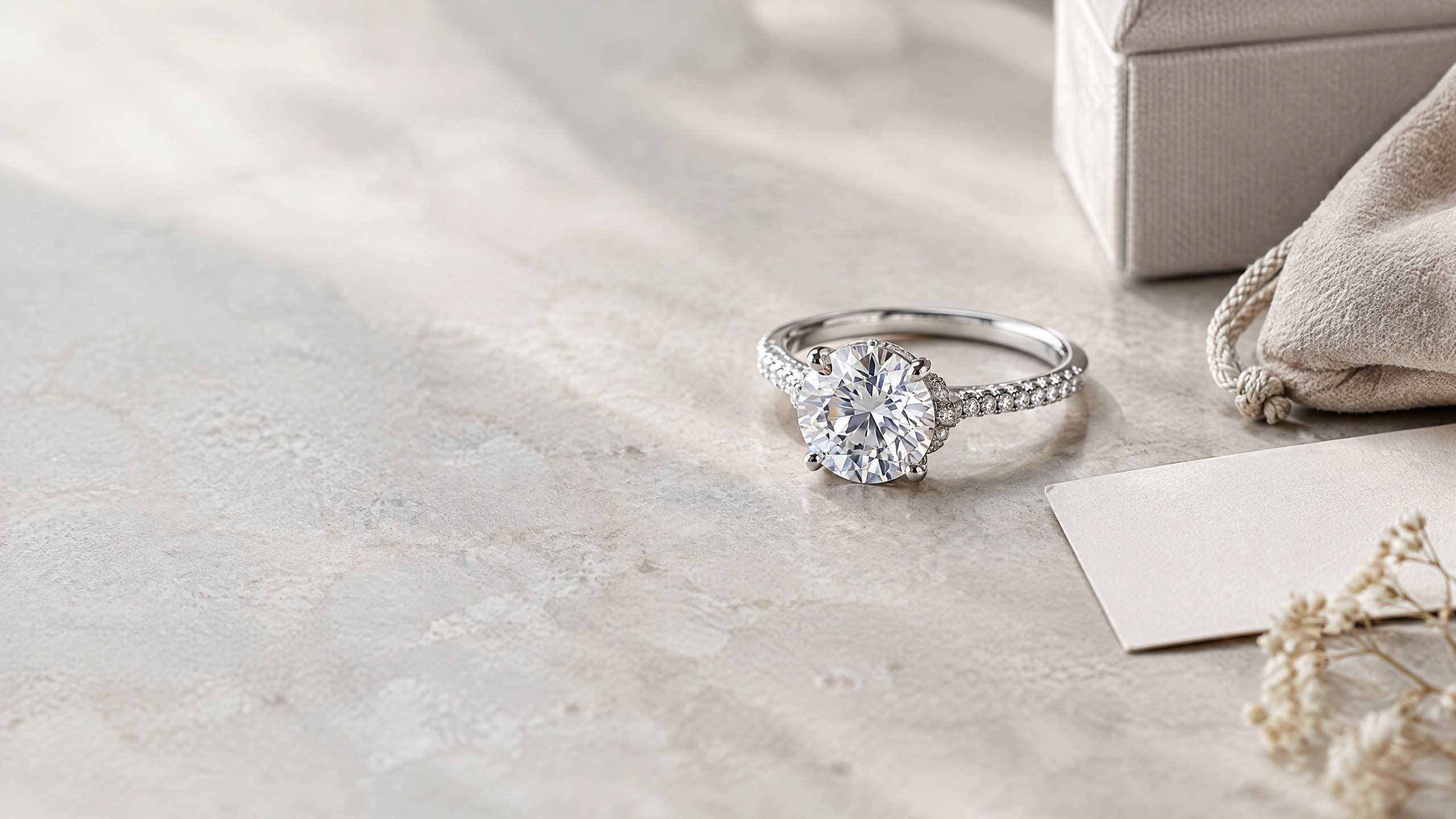
Wholesale & Supplier Guide
Wholesale Moissanite Rings: A Buyer’s Guide for Jewelry Wholesalers
For jewelry wholesalers, adding moissanite rings is not simply a matter of finding a bright stone at a competitive price. The more important decision is whether a supplier can help you build a repeatable retail collection.
That means consistent brilliance, accurate metal claims, stable sizing, reliable packaging, and a replenishment process that does not create avoidable returns. This guide explains what to check before placing a bulk order of moissanite rings and how to evaluate a supplier such as AphroSilver with a practical purchasing checklist. For background on the company, read the AphroSilver story and manufacturing background. When comparing a moissanite ring supplier, use the same documentation and repeatability standards for every shortlisted vendor.
What Are Wholesale Moissanite Rings?
Wholesale moissanite rings are rings purchased in commercial quantities for resale through jewelry stores, online shops, fashion brands, bridal collections, or distributors. They may use sterling silver, gold-plated silver, or another metal, with a laboratory-created moissanite center or accent stone.
Moissanite is silicon carbide. In a gemological study published by the Gemological Institute of America, synthetic moissanite was measured with refractive indices of 2.648 and 2.691, dispersion of 0.104, specific gravity of 3.22, and hardness of 9¼ on the Mohs scale.[1] These are material properties, not a guarantee that every commercial ring will look identical. Cut quality, facet alignment, color, polish, setting precision, and stone matching still affect the appearance of a finished product.
For that reason, a wholesaler should evaluate the finished ring, not only the stone name. A supplier that can provide consistent samples, clear specifications, and inspection records gives your retail team a more dependable product story.
Why 925 Sterling Silver Moissanite Rings Work for Retail Collections
Silver gives wholesalers access to a broad price architecture. It can support entry-level fashion jewelry, bridal-inspired designs, giftable products, and coordinated collections without requiring the retail price of a comparable gold item.
The current market data also supports silver’s commercial relevance. According to the Silver Institute’s World Silver Survey 2025, global silver jewelry fabrication reached 208.7 million troy ounces in 2024, equal to approximately 6,491 metric tonnes, after growing 3% year over year. The report forecasts 196.2 million ounces in 2025, a 6% decline driven largely by price pressure and regional weakness.[2] That forecast is a reason to plan carefully, not a reason to ignore the category: wholesalers need better assortment discipline, accurate costing, and faster replenishment.
The U.S. retailer survey published by the Silver Institute in 2025 offers another useful signal. Among surveyed jewelry retailers, 71% increased their silver jewelry inventory in 2024, by an average of 15%. Silver represented an average 31% of unit volume, while the average store reported 20% growth in silver jewelry sales. In addition, 92% said they were optimistic that silver jewelry sales would continue to grow over the next several years.[3]
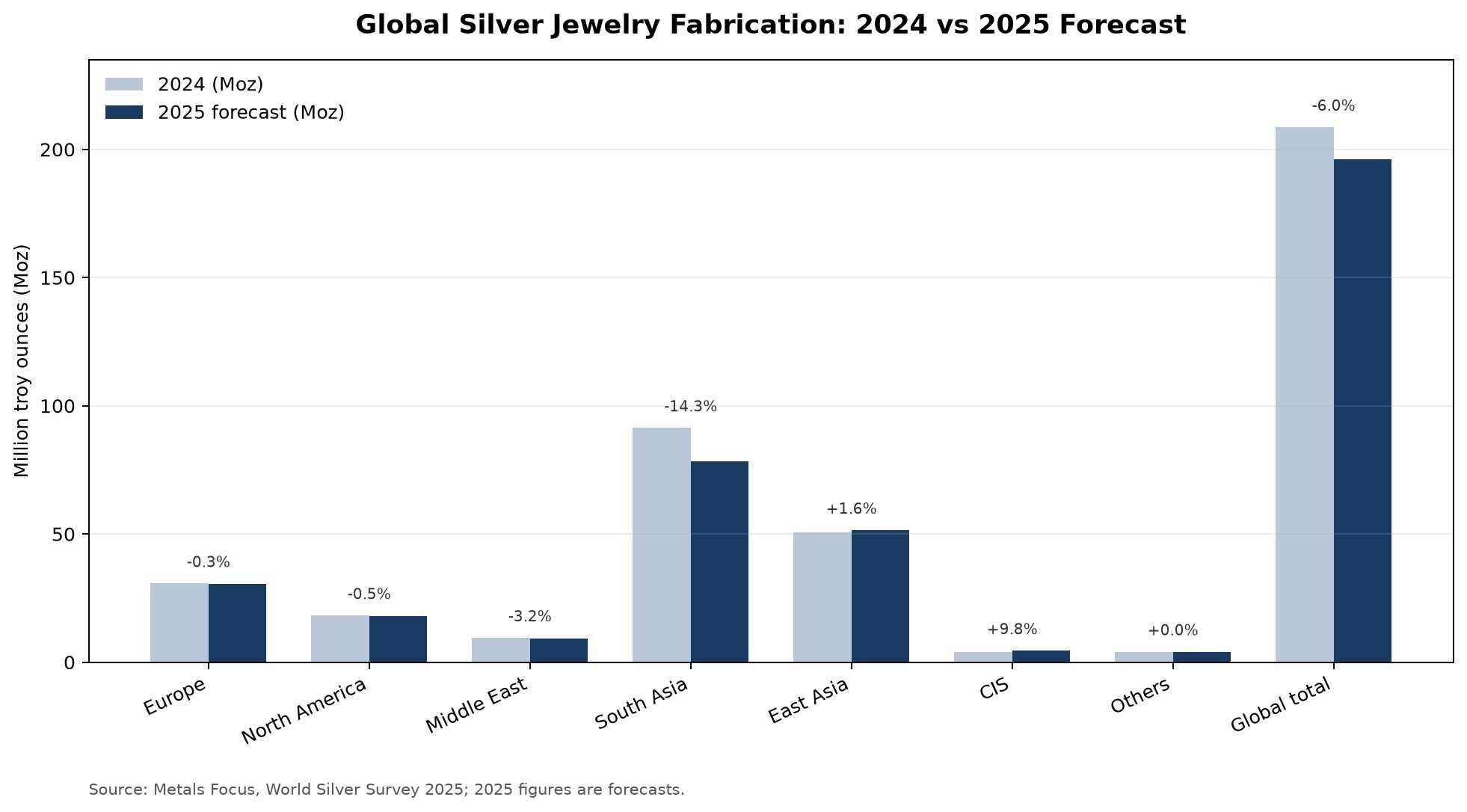
These numbers do not mean that every silver ring will sell. They suggest that a wholesaler can find opportunity when the collection is priced appropriately, visually consistent, and supported by a supplier that understands repeat orders.
How Wholesalers Should Evaluate a Moissanite Ring Supplier
1. Stone quality and consistency
The first question is not whether the supplier uses the word “moissanite.” It is whether the supplier defines and controls the specifications behind that word.
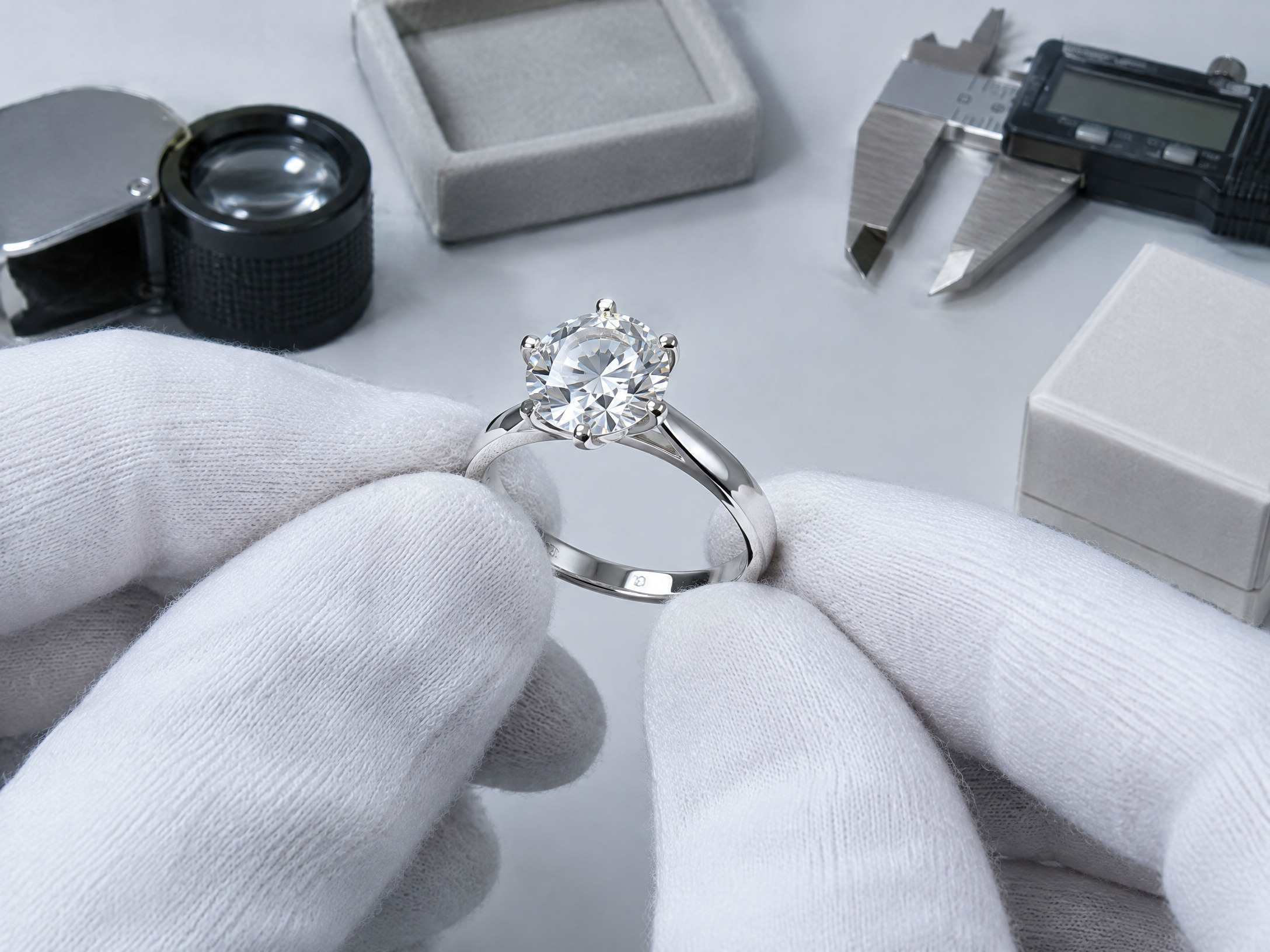
Ask for the stone’s stated color range, cut or shape, dimensions, weight tolerance, polish standard, and setting method. Request multiple samples of the same SKU if you are assessing consistency. Compare the stones under the same lighting and photograph them from the same angle. Look for differences in facet symmetry, visible inclusions, surface marks, color tint, and the alignment of prongs.
A useful wholesale sample protocol is to inspect at least three units of the same style before approving a production run. The objective is not to create a laboratory-grade gemological report for every fashion ring. The objective is to determine whether the supplier can reproduce a saleable appearance across units.
The supplier should also describe the stone accurately in product copy. The U.S. Federal Trade Commission’s Jewelry Guides apply to manufacturers, suppliers, and retailers. They state that laboratory-created or synthetic stones should be identified clearly so that buyers are not misled about whether a stone is mined.[4] Use precise language such as “laboratory-created moissanite” or “synthetic moissanite” where appropriate, and ensure that your own product pages use the same terminology.
2. 925 silver purity and plating
A “925” stamp is useful only when it matches the actual metal specification and your documentation. Under 16 CFR Part 23, the terms “Sterling Silver,” “Sterling,” and “Ster.” should not be used for a product unless it contains at least 925 parts per thousand pure silver.[4] In percentage terms, that is 92.5% silver by mass.
A supplier evaluation should therefore cover four separate questions:
| Check | What to request from the supplier | Why it matters to a wholesaler |
|---|---|---|
| Base metal | Written confirmation of 925 sterling silver composition | Prevents inaccurate product claims and inconsistent costing |
| Hallmark | Confirmation of where and how the 925 mark is applied | Supports receiving inspection and customer-service answers |
| Plating | Plating material, process, and stated thickness or performance specification | Helps set care instructions and retail expectations |
| Surface finish | Tarnish, discoloration, adhesion, and visual finish checks | Reduces avoidable returns and inconsistent shelf appearance |
Silver plating and color plating should not be treated as permanent simply because they look uniform when new. The FTC guidance says that a silver-plated or coated claim should identify the product as coated, and that a silver plating or coating should have reasonable durability.[4] Its supporting statement also explains that the 925 threshold remains relevant because consumers associate higher silver content with material attributes such as tarnish and corrosion resistance.[5]
For a wholesaler, the practical implication is clear: do not let “925 silver” silently imply “permanent plating.” Specify the base metal, surface treatment, care requirements, and the way those details will appear on the product page and packaging.
3. MOQ, lead time, and replenishment
Minimum order quantity is only one part of the commercial equation. A supplier with a low MOQ may still be difficult to work with if the lead time is unstable or if popular sizes cannot be replenished.
Before ordering bulk moissanite rings, ask for a written quotation that separates the following items:
- MOQ by style, stone size, color, and ring size;
- sample and approval time;
- production lead time after approval;
- packaging and labeling options;
- reorder MOQ and expected replenishment window;
- payment terms, shipping terms, and quotation validity;
- pricing for size changes, custom logos, and revised packaging.
A clear quote makes the supplier easier to compare. It also helps you calculate the inventory risk of a new collection. If you expect to test eight designs across four sizes, ask whether the supplier can support a mixed-style or mixed-size opening order. A practical test order can reveal which styles generate repeat demand before you commit to deeper stock.
4. Quality inspection and shipping
Quality control should be defined before production, not after a customer reports a loose stone or damaged finish. A basic receiving inspection can check SKU, quantity, ring size, metal mark, stone presence, prong alignment, surface finish, scratches, tarnish, packaging, and carton labeling.
For larger programs, consider an agreed inspection standard and a pre-shipment inspection. Independent testing and inspection providers such as QIMA describe jewelry quality assurance as covering product testing, inspections, and audits for quality, safety, and compliance.[6] The exact testing scope should match the market, product type, and claims you intend to make.
A supplier should be able to explain what it checks internally and what evidence it can provide. Useful evidence may include production photos, measurement records, material documentation, sample approval records, inspection reports, and shipping documents. Documentation is not a substitute for quality, but it makes quality more visible and easier to manage.
Shipping should also be part of the product decision. Ask how rings are separated by SKU and size, how stones and prongs are protected, whether individual pieces are bagged or boxed, and how cartons are labeled. A beautiful product that arrives mixed, scratched, or difficult to count creates labor costs that are often missed in the unit price.
A Practical Supplier Scorecard
Use the following scorecard when comparing a moissanite ring supplier. Weight the criteria according to your business model rather than choosing the supplier with the lowest quotation.
| Evaluation area | Evidence to collect | Suggested decision question |
|---|---|---|
| Stone consistency | Three or more units per approved SKU, photos, specifications | Would these units look like one collection on a retail page? |
| Metal accuracy | 925 specification, hallmark details, material documentation | Can we describe the metal accurately in every sales channel? |
| Plating and care | Surface-treatment details, care instructions, performance claims | Are customer expectations realistic and clearly disclosed? |
| Commercial terms | MOQ, lead time, reorder terms, packaging costs | Can we test demand without creating excessive inventory risk? |
| Quality control | Inspection checklist, sample approval, pre-shipment process | Who is responsible if a batch fails inspection? |
| Supply-chain visibility | Factory information, traceability, records, communication | Can the supplier answer questions quickly and consistently? |
| Shipping execution | Packing method, carton labels, shipping documents | Can our warehouse receive and count the goods efficiently? |
The emphasis on traceability is consistent with recent academic research on the jewelry industry. A 2025 study in Businesses based on interviews with eight high-jewelry professionals identified material traceability, ethical sourcing, and close supplier relationships as major sustainability challenges.[7] The study focused on high jewelry rather than wholesale silver rings, so its findings should not be treated as a direct sales forecast. Its practical lesson is still relevant: a supplier’s ability to explain where materials come from and how quality is controlled is part of brand value.
How to Request a Wholesale Quote from AphroSilver
A useful request for quotation gives the supplier enough information to quote accurately. Instead of writing only “Please send your wholesale price,” include your target market, product type, estimated quantity, required sizes, preferred metal, plating, packaging, delivery destination, and target launch date.
For example:
We are sourcing wholesale moissanite rings for a retail collection. Please quote your available 925 sterling silver styles, including stone specifications, ring-size range, MOQ, sample cost, production lead time, plating details, packaging options, inspection process, shipping terms, and reorder conditions. Please also indicate which designs can be mixed by style or size in an opening order.
AphroSilver’s silver moissanite ring product page can be used as a starting point for reviewing the product direction and discussing a wholesale assortment: view the Silver Moissanite Ring.
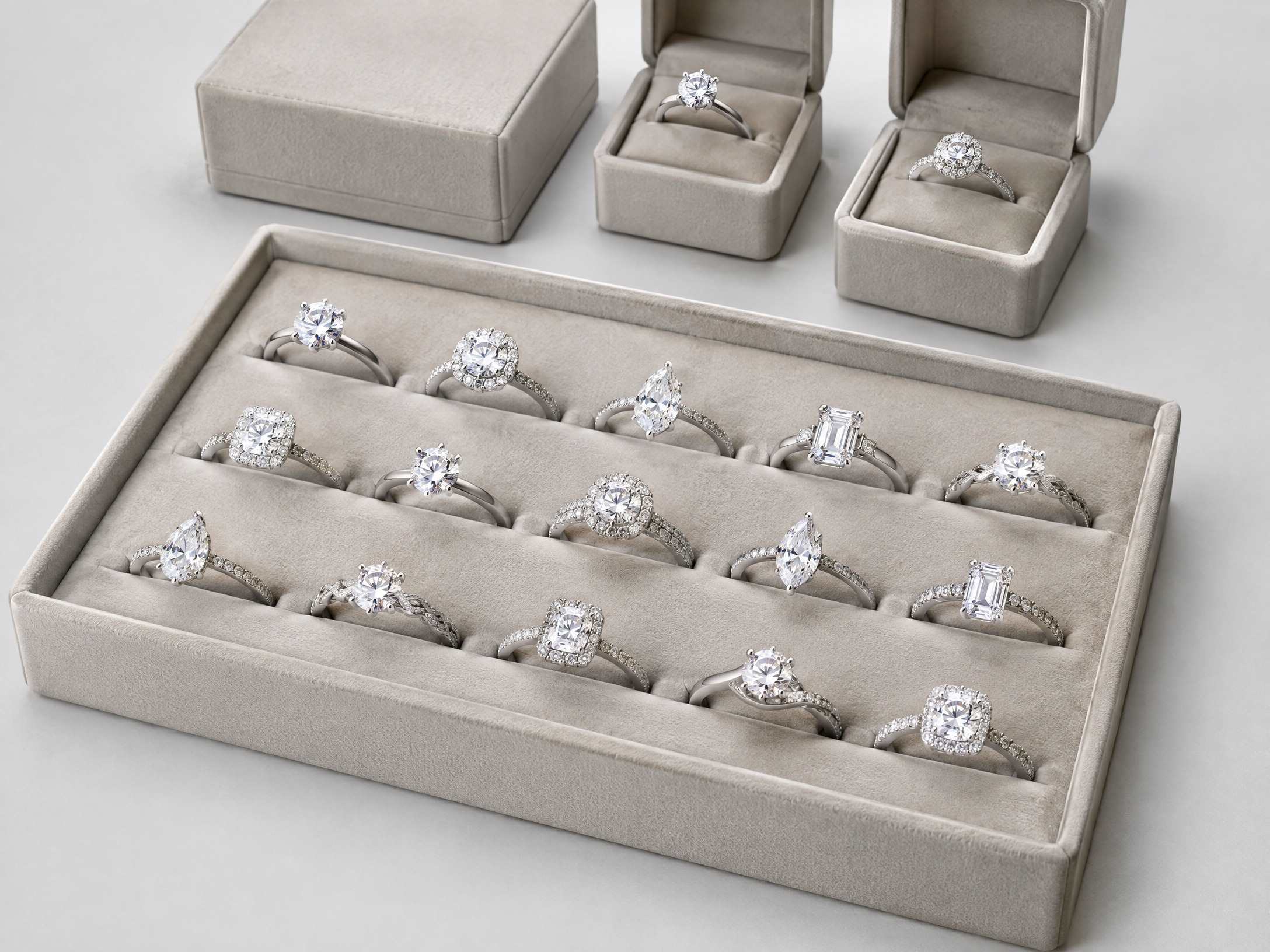
Request the AphroSilver Wholesale Catalog and Quote
If you are comparing moissanite rings wholesale suppliers, AphroSilver can help you move from product inspiration to a clearer purchasing discussion. Send your preferred styles, estimated quantity, ring sizes, destination market, and launch timeline. The more detail you provide, the more useful the quote will be.
View Silver Moissanite Ring OptionsRequest a Wholesale Catalog and QuoteInformation to include in your inquiry
Please include your company or store type, target customer, preferred stone shapes, required ring sizes, expected opening quantity, packaging requirements, destination country, and whether you need private-label or custom packaging. AphroSilver can then respond with the relevant product information and next-step quotation details. You can also review the 925 silver wholesale collection when planning a broader assortment of wholesale silver moissanite rings.
A dependable wholesale program is built on repeatability: consistent stones, verified 925 silver, transparent plating information, controlled inspection, and replenishment terms that fit your sales cycle. Contact AphroSilver to discuss the collection that best fits your retail channel.
Frequently Asked Questions About Wholesale Moissanite Rings
Moissanite has a Mohs hardness of 9¼ in the GIA study cited above, which supports its suitability for jewelry use. Hardness is not the same as invulnerability. A ring can still be damaged by impact, poor setting, abrasion, or chemical exposure. The supplier’s setting quality and the retailer’s care instructions remain important.[1]
“925” indicates a claimed fineness of 925 parts per thousand silver, or 92.5% silver by mass. In the United States, the FTC Jewelry Guides reserve “Sterling Silver” and similar terms for products containing at least 925/1,000 pure silver. A plated ring should still identify its base metal and surface treatment accurately.[4]
Start with the finished-product specification: stone type and size, metal composition, plating, ring-size range, MOQ, sample policy, lead time, inspection process, packaging, and reorder terms. These details determine whether the product can be sold consistently, not just whether the first quotation looks attractive.
Approve representative samples, inspect multiple units of each proposed SKU, define acceptance criteria, confirm the 925 and plating claims in writing, and agree on the pre-shipment inspection process. A smaller mixed-style test order may be more informative than a large order of one untested design.
The appropriate answer depends on the requested style, quantity, packaging, and delivery market. Include these details in your inquiry so AphroSilver can confirm available options, MOQ, lead time, and quotation terms for your specific program.
RELATED PRODUCT COLLECTION
Review six currently published products from the English Silver Moissanite Ring product group. Each option is presented for wholesale assortment planning, sample review, and supplier discussions.
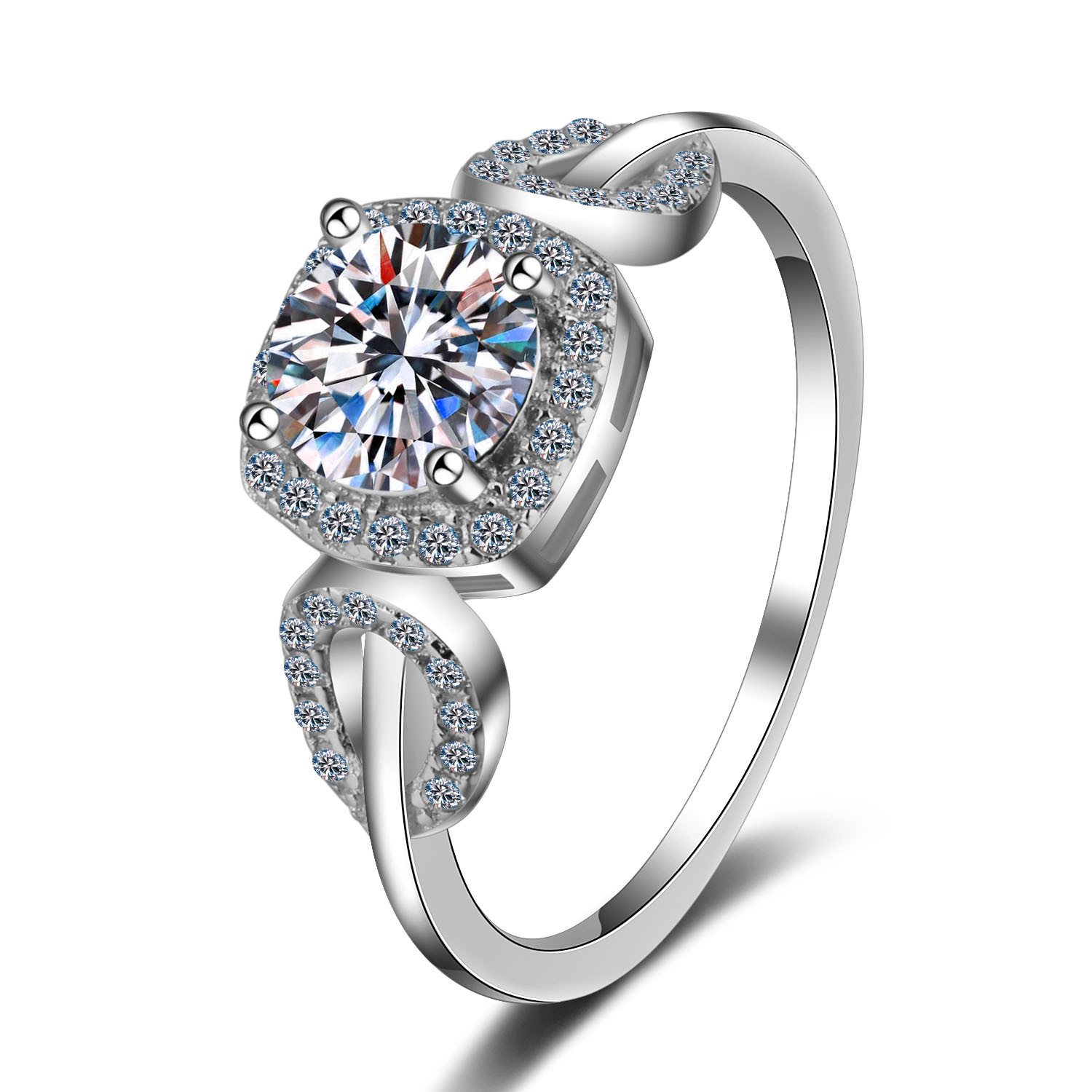
AZ034-J
High-grade S925 silver ring with VVS1 moissanite quality for wholesale jewelry sourcing.
View Silver Moissanite Ring group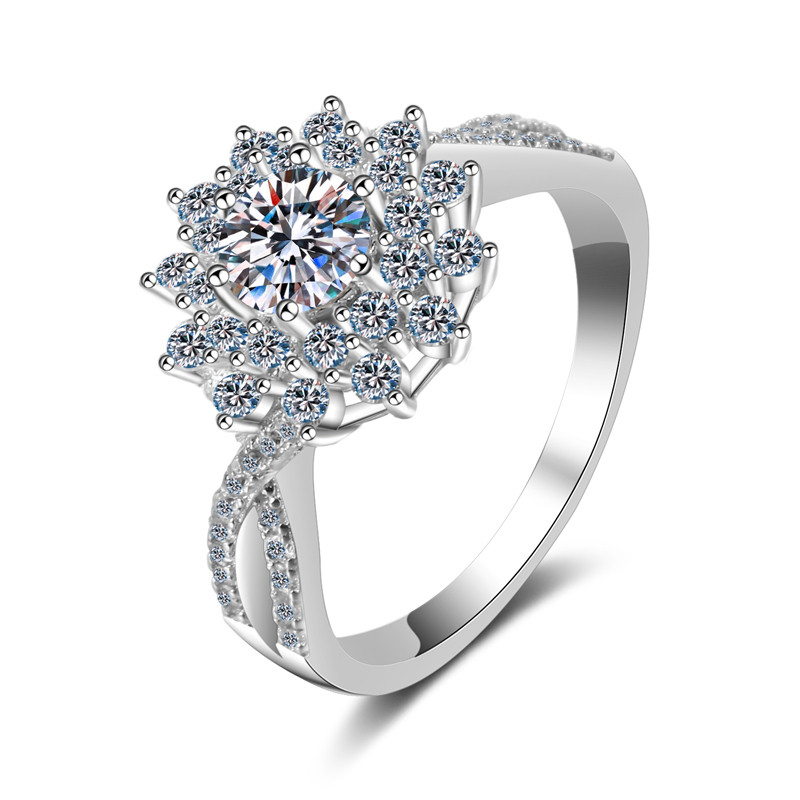
AZ030-J
VVS1 moissanite eternity band designed for high-end jewelry assortments and low-MOQ testing.
View Silver Moissanite Ring group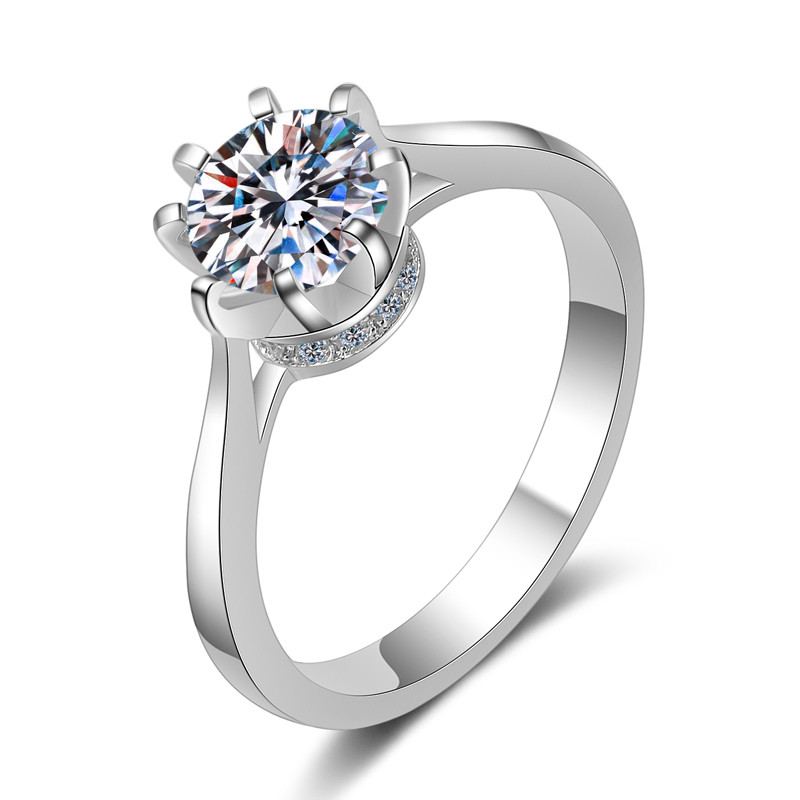
AZ021-J
A classic 925 sterling silver solitaire design with VVS1 moissanite for bridal and fine jewelry collections.
View Silver Moissanite Ring group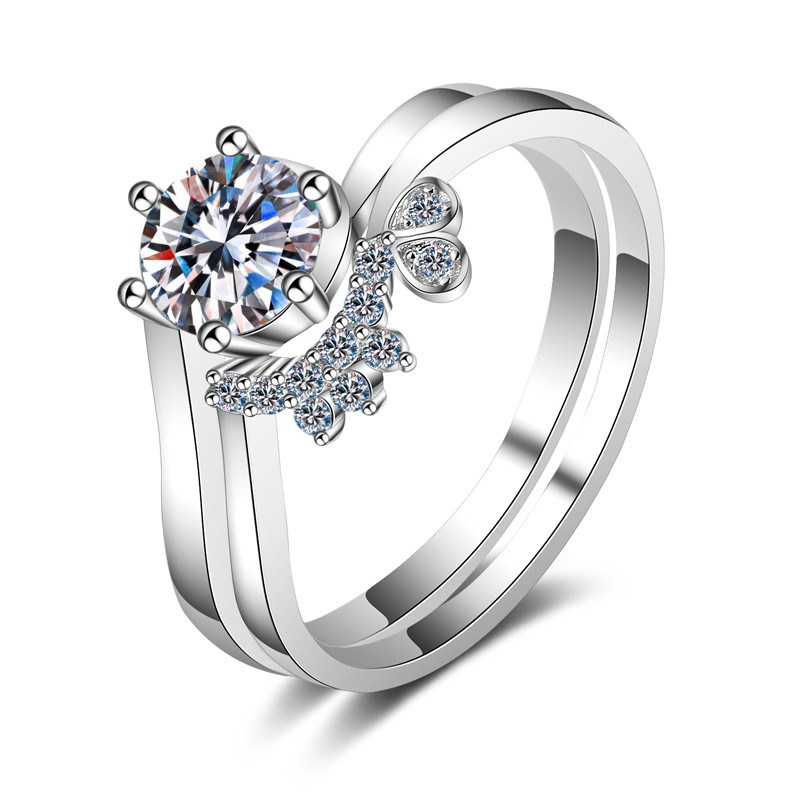
AZ019-J
Polished 925 silver solitaire ring with low-MOQ and OEM/ODM positioning for jewelry brands.
View Silver Moissanite Ring group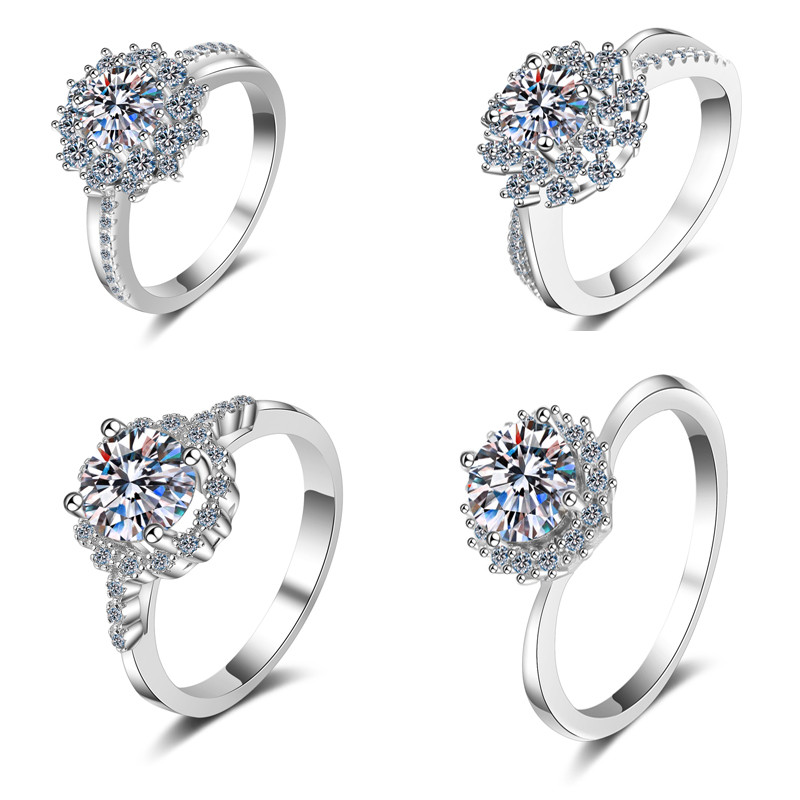
AZ001-J / AZ008-J / AZ013-J / AZ016-J
A fine jewelry grade collection option with 92.5% material purity and AAAA moissanite quality.
View Silver Moissanite Ring group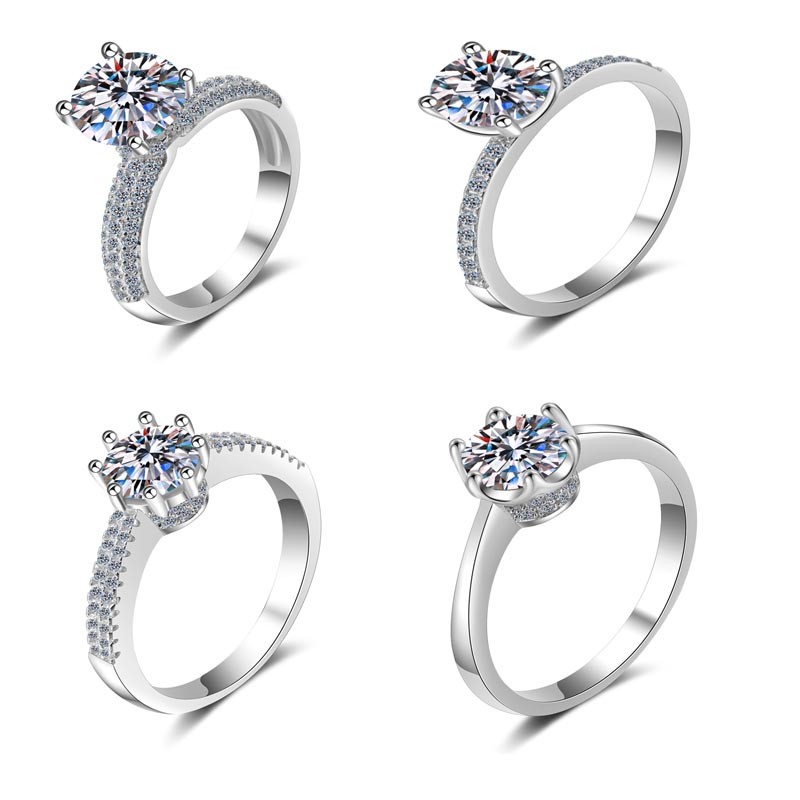
AZ002-J / AZ014-J / AZ015-J / AZ017-J
OEM/ODM-focused 925 silver moissanite styles for jewelry brands, retailers, and custom collections.
View Silver Moissanite Ring groupReferences
- GIA, Synthetic Moissanite: A New Diamond Substitute
- The Silver Institute, World Silver Survey 2025
- The Silver Institute, Silver Shines and Delivers Strong Results for U.S. Jewelers
- Electronic Code of Federal Regulations, 16 CFR Part 23: Guides for the Jewelry, Precious Metals, and Pewter Industries
- Federal Trade Commission, Statement of Basis and Purpose for the Revised Jewelry Guides
- QIMA, Jewelry Lab Testing, Inspections and Audits
- Perret, Navigating the High Jewelry Industry’s Future: Sustainability and Diversification, Businesses, 2025