Wholesale Silver Jewelry in 2026: The Complete Sourcing Guide for Retailers, Brands, and Importers
- Share
- Issue Time
- Oct 8,2026
Summary
A practical 2026 sourcing guide for retailers, brands, and importers covering 925 verification, supplier evaluation, MOQ, pricing, quality control, OEM/ODM, packaging, export planning, and sample approval.
Retailers, private-label brands, and importers are entering 2026 with two sourcing realities at the same time: silver remains strategically important, but its market is tighter and more volatile than a simple product-price comparison suggests. The Silver Institute’s World Silver Survey 2026, prepared with Metals Focus, reports a fifth consecutive annual market deficit in 2025 of 40.3 million troy ounces (Moz). It forecasts a sixth deficit of 46.3 Moz in 2026, while jewelry fabrication is expected to fall 16% year over year to about 159.4 Moz.1
That does not mean a retailer should buy less jewelry. It means the sourcing decision needs more discipline. A low unit price without reliable fineness testing, repeatable plating, documented production capacity, and a workable replenishment plan can create more cost than it saves.
This guide explains how to evaluate a wholesale silver jewelry supplier in 2026, from 925 sterling silver verification to MOQ, pricing, lead times, OEM/ODM, packaging, export documentation, and sample approval. It is written for buyers who need both commercial flexibility and evidence that a supplier can deliver consistently.
Quick answer: The best wholesale silver jewelry supplier is not necessarily the one with the lowest quotation. It is the supplier that can prove material quality, communicate production constraints, provide a representative sample, document the order clearly, and support repeatable replenishment.
For a ready-to-review assortment, browse 925 wholesale silver jewelry. Buyers planning a consolidated program can compare the buy wholesale silver jewelry one-stop solution, while private-label teams can review custom sterling silver jewelry development, the OEM silver jewelry manufacturer workflow, and the ODM silver jewelry manufacturer workflow.
Browse AphroSilver wholesale silver jewelry collections
Why Wholesale Silver Jewelry Matters for Retailers, Brands, and Importers in 2026
Silver jewelry sits between precious-metal credibility and accessible retail pricing. That combination makes it useful for independent stores, fashion labels, online sellers, gift businesses, and multi-brand distributors. It also creates a sourcing challenge: the product may be marketed as “silver” even when the buyer has not confirmed the alloy, the plated surfaces, or the durability of the finish.
The market data explains why a professional sourcing process matters now. In 2025, global silver supply was estimated at 1,090.4 Moz, while total demand reached approximately 1,130.7 Moz, leaving the 40.3 Moz deficit. For 2026, the Silver Institute forecasts total supply of 1,066.4 Moz and a further deficit of 46.3 Moz.1 A deficit is not a direct forecast of wholesale prices, and it should not be used as a promise that jewelry prices will rise. It does indicate that metal availability, working capital, hedging, and inventory decisions deserve closer attention.
The same report estimates that 2025 jewelry fabrication fell 8% to 5,889 tonnes, or approximately 189.3 Moz, and forecasts a further decline to 4,957 tonnes, or approximately 159.4 Moz, in 2026. At the same time, global silver recycling is forecast to rise from 197.6 Moz in 2025 to 211.3 Moz in 2026.1 For buyers, the practical implications are clear:
- quotations should state the quotation date and the price basis;
- replenishment plans should allow for metal-price movement and production capacity;
- buyers should separate the cost of silver content from labor, stones, findings, plating, packaging, and freight;
- samples and inspection criteria should be approved before a large order is released.
2025 actual vs. 2026 forecast: the sourcing signals
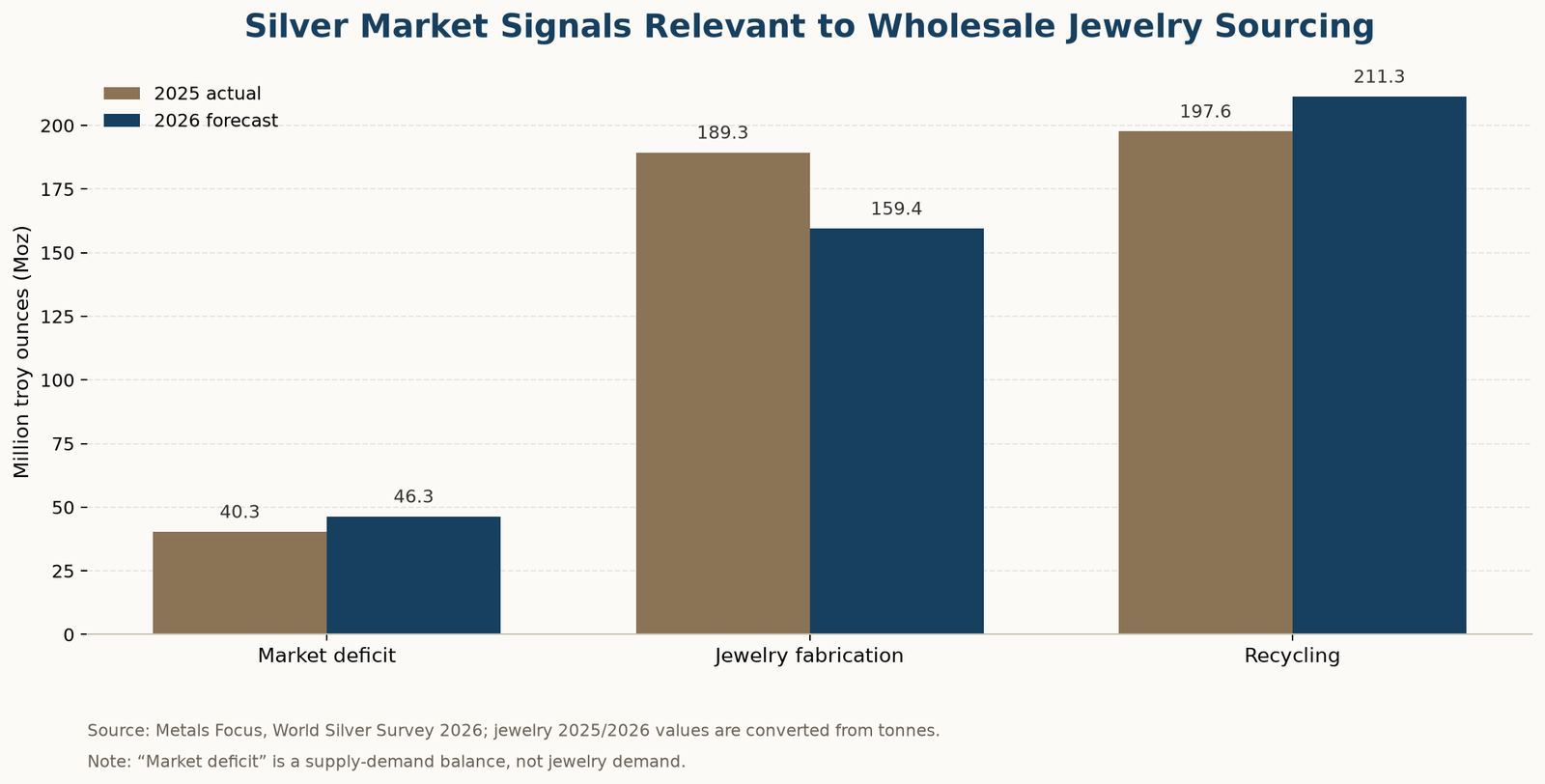
The chart should be used as context, not as a pricing calculator. A buyer still needs a product-level quotation because a lightweight silver butterfly necklace and a heavy signet ring have very different metal, labor, finishing, and packaging requirements.
What to Look for in a Reliable Wholesale Silver Jewelry Supplier
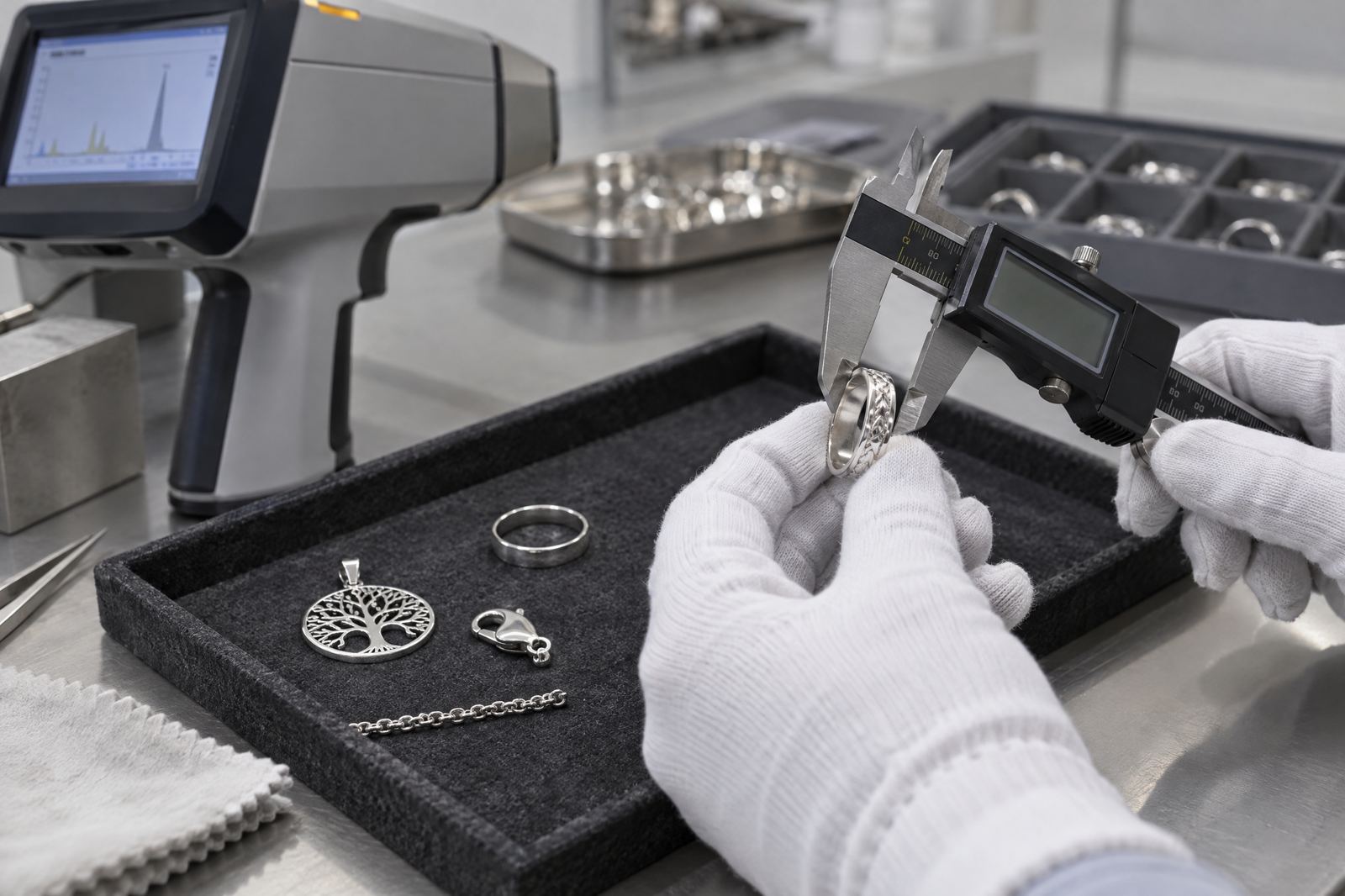
A reliable supplier should make it easy for a buyer to answer five questions:
- What exactly is the product made from?
- How is the material and finish tested?
- Can the supplier reproduce the design and quality at the quoted quantity?
- What happens if the sample, production lot, or shipment does not meet the agreed specification?
- Can the supplier provide the documents needed for the buyer’s destination market?
Factory, trading company, or one-stop supplier?
A factory may offer direct manufacturing control, but factory status alone does not prove strong communication, design development, inspection, or export execution. If the project includes a recognizable motif such as butterfly charms, ask whether a silver butterfly jewelry factory can document the same alloy, finish, and repeatability across the production lot. A trading company may offer broad assortment and flexible sourcing, but the buyer needs clarity about who actually manufactures the goods. A one-stop supplier can be useful when it combines product development, production coordination, quality control, packaging, and shipment support under one accountable process.
The right model depends on the order. A retailer replenishing proven SKUs may prioritize stable production and fast communication. A brand launching a private-label collection may need CAD development, mold management, stone sourcing, branding, packaging, and pre-shipment inspection. An importer may need consolidated shipments and destination-specific documents.
AphroSilver can position its service around this distinction rather than simply claiming to be “the best supplier.” Explain what the buyer receives, who owns each step, and what information is included in a quotation. Link the service page using an intent-matched anchor such as silver jewelry wholesaler one-stop solution.
Capacity and quality-control questions to ask
Before approving a supplier, ask for written answers to these questions:
- Which operations are performed in-house, and which are subcontracted?
- Which tests are used for silver fineness and plating thickness?
- Does the supplier keep a retained sample or approved master sample?
- How are stone setting, solder joints, clasps, posts, and jump rings inspected?
- What is the inspection method for scratches, porosity, pits, discoloration, sharp edges, and loose stones?
- How are finished goods packed to reduce scratching and tarnishing during storage and transport?
- What is the process for handling defects, shortages, mixed sizes, or incorrect labeling?
Industry forum discussions are useful for identifying questions that experienced makers actually ask, especially around service, quantity discounts, shipping reliability, and item-level quality. However, forum anecdotes are not laboratory evidence and should not replace a current sample, a signed specification, or a test report. The Ganoksin Orchid jewelry community illustrates this practical point: professional buyers often evaluate a supplier by item-specific quality, service, quantity breaks, and shipping performance rather than by price alone.6
Wholesale Silver Jewelry: MOQ, Pricing, Lead Times, and Packaging
MOQ: ask for the definition, not only the number
MOQ can mean at least four different things:
- minimum pieces per design;
- minimum pieces per size or color;
- minimum order value across a collection;
- minimum production quantity for a custom mold or private-label project.
A supplier may accept a low mixed-SKU trial order but require a higher quantity for custom engraving, branded packaging, or a new mold. Ask the supplier to state whether the MOQ applies per SKU, per material, per finish, per size, or per shipment.
For a first order, a controlled pilot is usually more informative than a very large assortment. Select representative items that expose different risks: a chain, a stone-set ring, a hollow pendant, a polished item, a plated item, and a clasp or earring component. The purpose is not to minimize every cost; it is to test the supplier’s repeatability.
How wholesale silver jewelry pricing is built
A transparent quotation should identify the main cost drivers. Buyers searching for 9.25 sterling silver wholesale should confirm that the intended standard is 925 sterling silver and that the quotation separates metal content from workmanship, components, and finish.
| Cost component | What the buyer should confirm |
|---|---|
| Silver content | Alloy specification, estimated or actual weight, and quotation date |
| Manufacturing | Casting, stamping, forming, soldering, polishing, assembly, and labor assumptions |
| Stones and components | Natural, synthetic, glass, cubic zirconia, or other material; size and tolerance |
| Surface finish | Rhodium, gold, rose-gold, black, anti-tarnish, or other treatment; thickness or performance specification where applicable |
| Branding | Engraving, logo, tags, cards, boxes, pouches, and barcode or SKU labeling |
| Packaging and freight | Inner packaging, carton quantity, Incoterm, freight method, insurance, and destination charges |
Do not compare two quotations until the scope is normalized. A price may look lower because it excludes a branded box, stone certificate, plating, inspection, freight, or import-related charges. For metal-sensitive products, ask whether the unit price is fixed for a validity period or subject to adjustment if silver moves beyond an agreed threshold.
Lead times: separate development, production, and shipping
A useful lead-time statement has at least three parts:
- Development time: artwork, CAD, mold, sample, revisions, and approval.
- Production time: manufacturing, finishing, inspection, packing, and order release.
- Transit time: pickup, export clearance, freight, destination clearance, and final delivery.
A supplier should also state what pauses the clock. Common examples include late artwork, delayed stone approval, changes to packaging, unpaid deposits, and sample revisions. Buyers should request the planned ship date only after the specification and approval milestone are clear.
Packaging is part of product quality
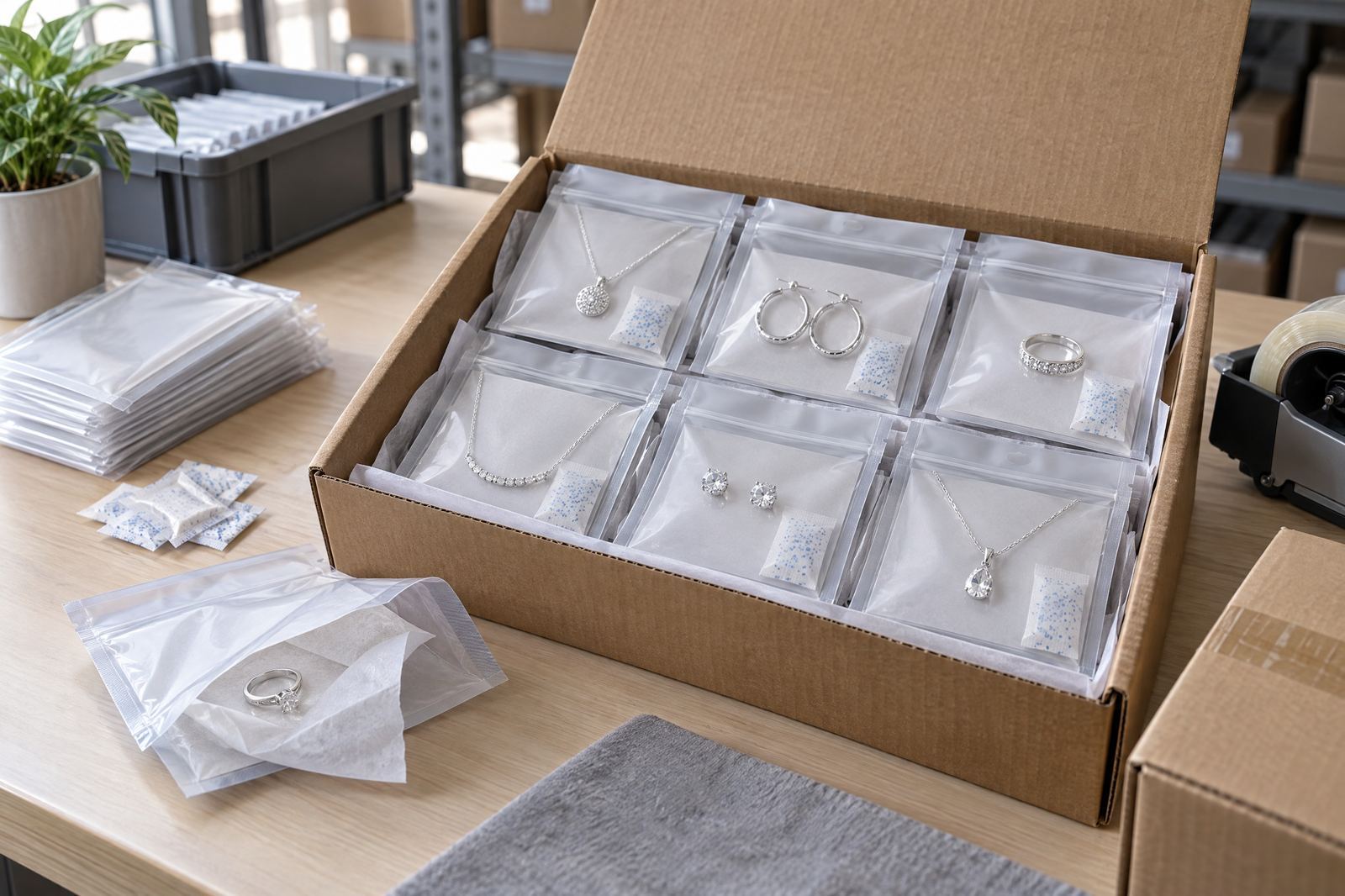
Sterling silver can tarnish when exposed to sulfur-containing gases. The Canadian Conservation Institute explains that silver reacts with sulfur-containing gases to form a tarnish layer and notes that higher relative humidity increases the tarnishing rate; it recommends storage below 50% RH for silver in preventive-conservation contexts.7 This is not a universal retail-storage guarantee, but it is a useful reason to discuss anti-tarnish paper or bags, desiccants, sealed inner packaging, carton materials, and warehouse conditions.
Packaging should also prevent mechanical damage. Separate polished pieces, protect prongs and chains from abrasion, keep earrings and small findings organized, and ensure that the packaging used for plated surfaces does not rub against the finish during transit.
How to Verify 925 Sterling Silver and Plating
What 925 means
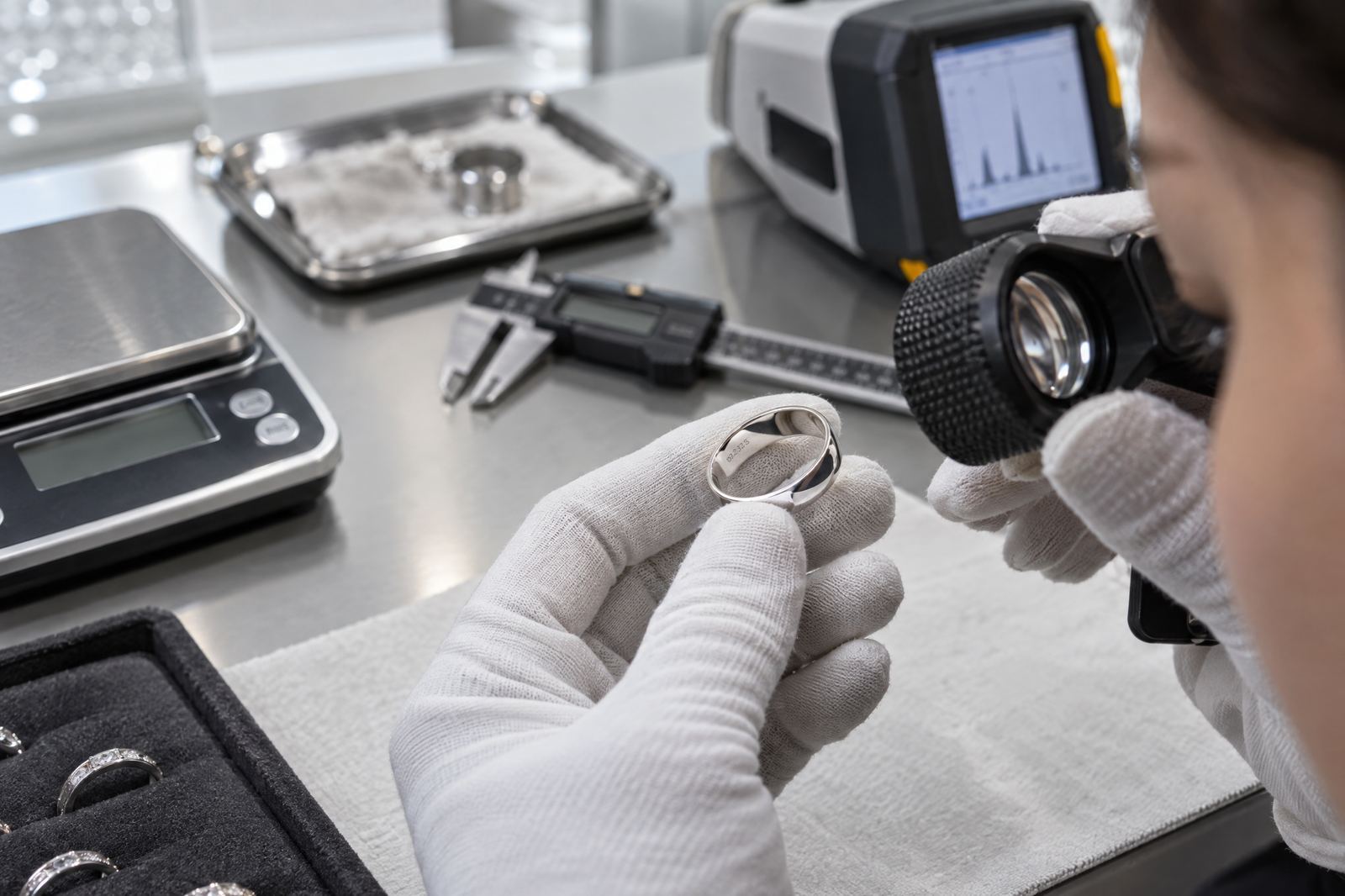
In the United States, the Federal Trade Commission explains that “silver,” “sterling,” and “sterling silver” describe products containing 92.5% pure silver, and that a “925” mark means 925 parts per thousand are pure silver.2 The eCFR Jewelry Guides likewise state that “solid silver,” “Sterling Silver,” “Sterling,” or “Ster.” should not be used to describe a product unless it is at least 925/1,000ths pure silver.3
That is the minimum meaning of the fineness claim. It does not automatically prove that every component, solder joint, spring, clasp, plating layer, or stone setting is identical to the main body. The U.S. rules also recognize certain component exemptions and require accurate descriptions for coated products. Destination-market rules may differ, so the importer remains responsible for checking the applicable law before labeling or selling.
A practical verification workflow
Step 1: Review the specification. Record the claimed alloy, product weight, dimensions, finish, stones, findings, and markings. Avoid a vague instruction such as “make it silver.”
Step 2: Check the mark, but do not stop there. A 925 stamp is a claim to verify, not proof by itself. Confirm where the mark is placed and whether the product is solid sterling silver, silver-plated, or another material with a silver-colored finish.
Step 3: Request a test method and report. Depending on risk and order value, use XRF screening, an accredited laboratory, or another appropriate assay method. Ask which part was tested and whether the result applies to the production lot or only to a sample.
Step 4: Inspect the high-risk areas. Check solder joints, clasps, posts, jump rings, hollow sections, stone settings, and areas where plating can wear. A product can pass a test on its main body and still have a commercial problem in its construction or finish.
Step 5: Approve a golden sample. Keep a dated, photographed master sample with the specification. Use it for production comparison and dispute resolution.
Plating is not the same as solid sterling silver
If a product has a silver coating over a base metal, it should be described as plated or coated rather than as solid sterling silver. The eCFR specifically addresses misleading silver descriptions and says that silver plating or coating claims should reflect reasonable durability.3
For gold-plated or rhodium-finished sterling silver, request the base-metal claim and the finish specification separately. Where appropriate, document plating thickness, test method, color reference, adhesion, abrasion expectations, and the conditions under which the finish may change. Avoid promising a fixed lifespan unless the test conditions and wear profile are defined.
Why anti-tarnish and wear claims need careful language
A 2015 open-access study in npj Heritage Science found that the morphology, composition, thickness, and interface of tarnish layers on sterling silver varied significantly with the sulfidation method. The study also identified copper as an important element in the analyzed sulfide layers.8 This supports a cautious commercial message: anti-tarnish treatment can be useful, but performance depends on alloy, environment, packaging, handling, and test conditions.
Use language such as “designed to reduce tarnishing under specified storage conditions” only when the supplier can provide a specification or test basis. Do not turn a packaging feature into an unlimited “tarnish-proof” promise.
Custom, OEM, and ODM Options for Wholesale Silver Jewelry
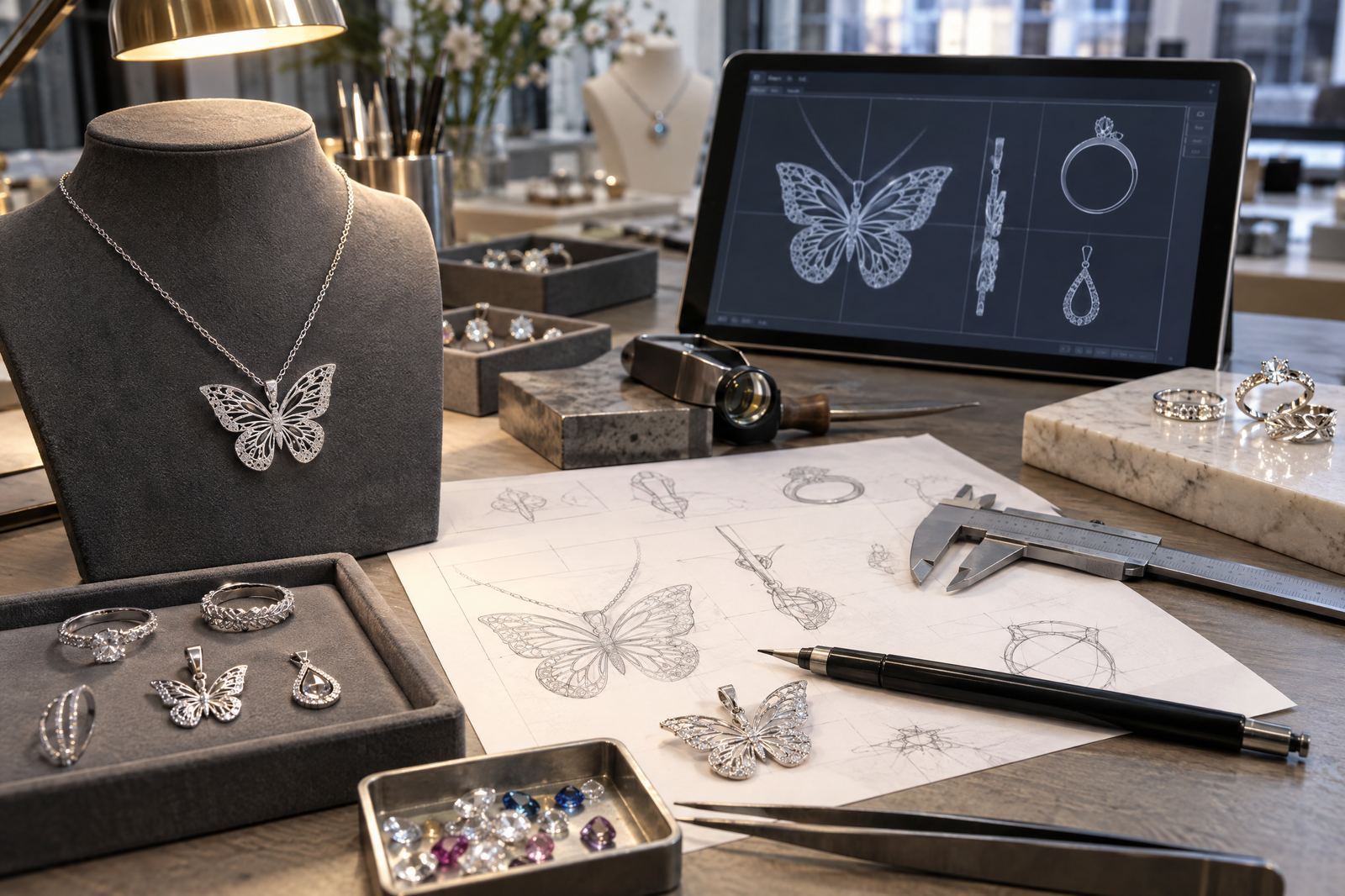
Custom development works best when the buyer provides a clear brief. Include:
- target customer and price tier;
- reference images or sketches;
- dimensions and approximate weight;
- alloy and finish;
- stone type, size, color, and setting;
- logo, engraving, or trademark requirements;
- packaging and labeling requirements;
- target quantity and launch date;
- destination market and compliance requirements.
OEM vs. ODM
OEM generally means producing to the buyer’s design, drawing, mold, or specification. ODM usually means selecting and adapting an existing supplier design, then adding changes such as a logo, stone, finish, size, packaging, or collection theme. Actual definitions vary by supplier, so the contract should describe the deliverables rather than rely on the acronym.
For custom work, clarify who owns the CAD files, molds, tooling, artwork, photos, and revised designs. Confirm whether a mold fee is refundable against production, how many sample revisions are included, and what happens if the approved sample cannot be reproduced at scale.
A natural internal link here is OEM/ODM silver jewelry buyer cases, provided the page contains real examples with enough detail to help a buyer understand the process. Case studies should show the brief, the product solution, the quality checkpoints, and the final delivery scope rather than only displaying finished images.
Silver Jewelry Manufacturers vs. Trading Companies: What Buyers Should Know
The most useful comparison is not “factory good, trading company bad.” It is whether the commercial relationship gives the buyer enough control and accountability.
| Evaluation point | Direct manufacturer | Trading or sourcing company | What the buyer should verify |
|---|---|---|---|
| Product control | Often direct for listed processes | May coordinate multiple factories | Who owns each production step? |
| Assortment | May be narrower or specialized | Often broader across categories | Are specifications consistent across suppliers? |
| Custom development | Strong when design capability exists | Strong when project management is real | Who creates and approves CAD, molds, and samples? |
| Quality responsibility | Usually tied to factory process | Depends on the sourcing agreement | Who handles corrective action and replacement? |
| Export support | Varies | May be a core service | Which party issues documents and coordinates freight? |
| Best fit | Repeatable production and technical control | Mixed assortments and one-stop coordination | Does the model match the order type? |
Ask for the legal entity on the quotation, invoice, packing list, and payment instructions. Confirm the beneficiary name and avoid changing bank details based only on an email request. For larger or repeat orders, use a written purchase order that links the item code to the approved sample and specification.
Top Sourcing Destinations and Export Documentation for Wholesale Silver Jewelry
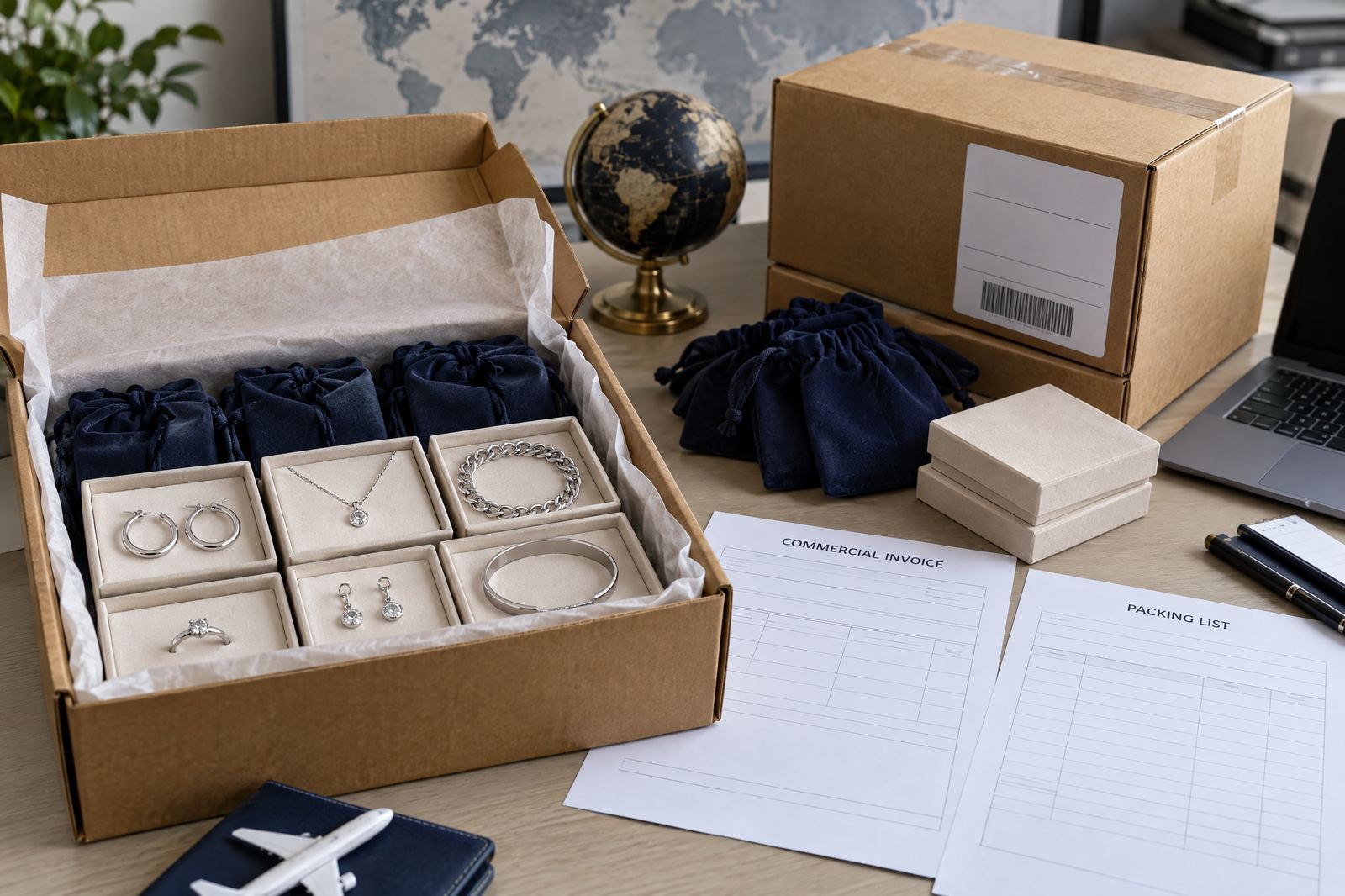
The best sourcing destination depends on design complexity, order size, target price, required finish, compliance needs, and logistics. A capable silver accessories exporter should also explain how export documents, packing, inspection, and freight coordination are handled for the destination market. Do not choose a country only because a directory lists many suppliers. Shortlist suppliers by capability, then compare total landed cost and risk.
A commercial export file may include:
- commercial invoice;
- packing list;
- purchase order or sales contract;
- transport document, such as airway bill or bill of lading;
- certificate of origin where required;
- material or assay information where required;
- stone or product declarations where relevant;
- inspection or test report when agreed;
- insurance document if applicable;
- import and labeling information required by the destination market.
The exact document set varies by country, product classification, transport mode, and importer status. A supplier should not promise that one standard document package fits every destination. The importer should confirm tariff classification, marking rules, customs requirements, restricted materials, and consumer-product obligations with a qualified customs broker or competent authority.
How AphroSilver Supports Buyers Sourcing Wholesale Silver Jewelry
A useful supplier page should make the buying process visible. For AphroSilver, the content can explain how a buyer moves from product selection or design brief to quotation, sample approval, production, inspection, packaging, and shipment.
The strongest proof points are specific. A serious sterling silver wholesale supplier and wholesale jewelry manufacturer should make these checkpoints visible before a buyer commits to bulk silver jewelry.
- which product categories are available;
- whether mixed-SKU orders are supported;
- what information is included in a quotation;
- how 925 silver and finish specifications are confirmed;
- what sample and inspection steps are available;
- how OEM/ODM and branded packaging are handled;
- what the buyer receives before shipment;
- how reorder information is stored and reused.
Link the relevant service page with descriptive anchor text such as wholesale silver jewelry manufacturer and sourcing support. Use wholesale silver jewelry buyer cases for evidence, and link the wholesale policy where MOQ, payment, sample, defect, or return terms are explained.
Request a Quote and Order Samples
A buyer can make the first inquiry easier to evaluate by including:
- product links, item codes, or reference images;
- estimated quantity per SKU;
- sizes, colors, and finish requirements;
- target destination and preferred Incoterm;
- packaging and branding needs;
- required compliance documents;
- requested sample quantity;
- target delivery window;
- whether the project is stock, OEM, ODM, or private label.
Ask for the quotation in a format that separates product cost, customization, packaging, inspection, and shipping. Then order representative samples before committing to a large production run. Approve the written specification and golden sample, not only a product photo.
If you are comparing wholesale silver jewelry suppliers for a retail collection, private-label launch, or import program, contact AphroSilver with your target products, quantities, destination market, and timeline. The team can help you identify suitable items, clarify 925 silver and finish specifications, evaluate OEM/ODM options, and prepare the next sample or quotation step.
Explore Wholesale Silver Jewelry Contact AphroSilver for a Sourcing Quote
Related Reading for Silver Jewelry Buyers
Use these related guides to connect market direction with day-to-day supplier decisions:
Frequently Asked Questions About Wholesale Silver Jewelry
What does 925 mean in wholesale silver jewelry?
925 means that 925 parts per thousand of the relevant silver product are pure silver, equivalent to 92.5%. In the United States, the FTC explains that “sterling silver” and “925” describe this level of silver content, subject to applicable marking and disclosure rules.2 Buyers should still verify the claim with an appropriate test and clarify whether the product is solid sterling silver or silver-plated.
How do I choose a wholesale silver jewelry supplier?
Compare material verification, product consistency, MOQ, quotation transparency, sample quality, lead-time logic, packaging, export support, corrective-action procedures, and communication. A supplier should be able to connect the quotation to a written specification and an approved sample.
Is a 925 stamp enough to prove sterling silver quality?
No. It is an important marking, but a stamp is not a substitute for supplier documentation and product testing. Verify the alloy, test method, tested component, production-lot relevance, and the legal requirements of the destination market.
What is a reasonable MOQ for wholesale silver jewelry?
There is no universal MOQ. It may apply per design, per size, per finish, per custom mold, or across the full order value. Ask the supplier to define the MOQ in writing and request a mixed-SKU pilot if you need to test demand before scaling.
How can retailers reduce tarnishing during storage?
Reduce exposure to sulfur-containing materials and humid air, use suitable anti-tarnish packaging, keep pieces separated from abrasion, and control warehouse conditions. The Canadian Conservation Institute notes that tarnishing accelerates as relative humidity increases and recommends storage below 50% RH in its preventive-conservation guidance.7
Can AphroSilver handle OEM or ODM silver jewelry?
AphroSilver can present OEM/ODM as separate workflows: OEM for buyer-provided designs or specifications, and ODM for adapting existing designs. The final page should state the actual capabilities, sample process, MOQ, tooling terms, file ownership, packaging options, and production lead time rather than using OEM/ODM as an unsupported label.
Curated from the English product catalog
Product Recommendations
Explore eight distinct 925 sterling silver products selected for retailers, brands, and importers building a balanced wholesale jewelry assortment.

Custom 925 Sterling Silver Bracelet | Private Label Jewelry Manufacturer
A genuine 925 sterling silver bracelet with flexible customization support for jewelry brands, retailers, and private-label collections.
View product details
925 Sterling Silver Pony Pendant Necklace | Wholesale High-Quality Jewelry Silver Necklace
A distinctive pony pendant in 925 sterling silver with zircon detail, suited to boutique assortments and wholesale necklace sourcing.
View product details
925 Sterling Silver Butterfly Pendant Necklace | Elegant Wholesale Jewelry Supplier
An elegant butterfly pendant made from 925 sterling silver, offering a recognizable motif for fashion jewelry and wholesale collections.
View product details
Wholesale 925 Sterling Silver Butterfly Charm Hoop Earrings | Dainty Jewelry for Women
Dainty 925 sterling silver hoop earrings with butterfly charms, a practical option for everyday wholesale jewelry ranges.
View product details
Wholesale 925 Sterling Silver Bow Stud Earrings | Cute Minimalist Jewelry for Women
Minimalist bow stud earrings in 925 sterling silver, designed for boutiques, gift shops, and bulk fashion jewelry assortments.
View product details
Classic Sterling Silver Hoop Earrings for Women | Trendy Wholesale Jewelry Collection
Classic hoop earrings made with 925 sterling silver, offering an easy-to-style core item for trend-led wholesale jewelry collections.
View product details
Trendy 925 Sterling Silver Zircon Star Bracelet | Personalized Wholesale Jewelry Manufacturer
A star bracelet in 925 sterling silver with zircon accents, suitable for personalized collections and brand-focused wholesale sourcing.
View product details
High-Quality Sterling Silver Link Bracelet | Elegant Women's Jewelry Supplier
A classic link bracelet using 925 sterling silver, giving retailers a refined, versatile piece for women’s jewelry collections.
View product details- World Silver Survey 2026, Silver Institute and Metals Focus
- Buying Platinum, Gold, and Silver Jewelry, U.S. Federal Trade Commission
- 16 CFR Part 23, Guides for the Jewelry, Precious Metals, and Pewter Industries
- OECD Due Diligence Guidance for Responsible Supply Chains of Minerals
- Supplier information, Ganoksin Orchid Jewelry Forum
- Understanding how silver objects tarnish, Canadian Conservation Institute
- The sulfidation process of sterling silver in different corrosive environments, npj Heritage Science